Why Weight Charts Don’t Always Tell the Whole Story
One of the most common concerns parents share is that their child is still within the manufacturer’s recommended weight range, yet the pull-up diaper is already leaking or feeling too tight.
For example, a toddler weighing 34 lbs may still fall within the suggested range for a particular size. However, parents often notice:
- Frequent leaks during the day
- Wet clothing despite regular diaper changes
- Red marks around the waist or thighs
- Difficulty pulling the diaper up and down
This happens because weight charts are designed as general guidelines rather than exact sizing rules.
Children with the same weight can have very different body shapes. Some may have chunkier thighs, broader hips, or larger waists, while others are slimmer and taller. As a result, two children within the same weight range may require different pull-up sizes.
When parents discuss leakage issues, a common piece of advice is simple:
Focus on fit, not just weight.
A properly fitted pull-up diaper should sit snugly around the waist and legs without leaving deep marks or creating gaps. If your child experiences leaks or discomfort, it may be time to evaluate the fit—even if they haven’t reached the upper weight limit yet.
In many cases, moving up a size slightly earlier can provide a better seal around the legs and improve overall leak protection.
Why Do Pull-Up Diapers Leak?
Pull-up diapers are designed to fit differently from traditional taped diapers. Since they are worn like underwear, they rely heavily on an accurate fit around the waist and legs.
When the fit is not correct, gaps can form around the leg cuffs or waistband, allowing urine to escape before it can be absorbed.
Common causes of pull-up diaper leaks include:
- Wearing the wrong size
- Gaps around the legs
- A loose waistband
- Pull-ups becoming saturated overnight
- Incorrect positioning after putting them on
- Switching sizes too early or too late
Among these factors, sizing is often the biggest contributor.
Signs Your Pull-Up Diaper Is Too Small
Many parents continue using the same size because their child’s weight still falls within the manufacturer’s recommended range. However, weight charts are only guidelines.
A pull-up that is too small may show the following signs:
Red Marks Around the Waist or Legs
If you notice visible red lines after removing the pull-up, the elastic may be too tight.
While light marks can be normal, deep or persistent marks often indicate that the diaper is becoming too small.
Frequent Leaks Despite Regular Changes
When a pull-up is too tight, the absorbent core can become compressed. This reduces its ability to distribute liquid effectively and may increase leakage.
Difficulty Pulling It On or Off
If dressing your child suddenly becomes more difficult, it may be time to move up a size.
Side Panels Stretch Excessively
Overstretched side panels can create pressure points while reducing overall fit and comfort.
Signs Your Pull-Up Diaper Is Too Large
Many parents assume that sizing up will automatically solve leakage issues. Surprisingly, this can make the problem worse.
A pull-up that is too large may show these symptoms:
Gaps Around the Legs
Leg openings should fit snugly without being tight.
If you can easily see gaps between your child’s skin and the leg cuffs, urine may escape before reaching the absorbent material.
Loose Waistband
A waistband that slides down or shifts frequently can create openings that lead to leaks.
Leaks Occur Soon After Use
If leakage happens shortly after your child urinates, the issue may be fit rather than absorbency.
Pull-Up Appears Baggy
Excess material around the hips or thighs often indicates that the size is too large.
Why Leaks Happen More Often at Night
Nighttime leaks are one of the most common complaints among parents using pull-up diapers.
During sleep, children may remain in the same position for several hours. Urine can accumulate in one area of the pull-up, creating pressure on the leg openings or waistband.
Nighttime leaks can occur because:
- The pull-up is too small and reaches capacity quickly.
- The pull-up is too large and shifts during sleep.
- The child has outgrown the absorbency level of the product.
- The pull-up is not designed for overnight use.
Before changing brands, it’s worth checking whether the current size still fits properly.
How to Choose the Right Pull-Up Diaper Size
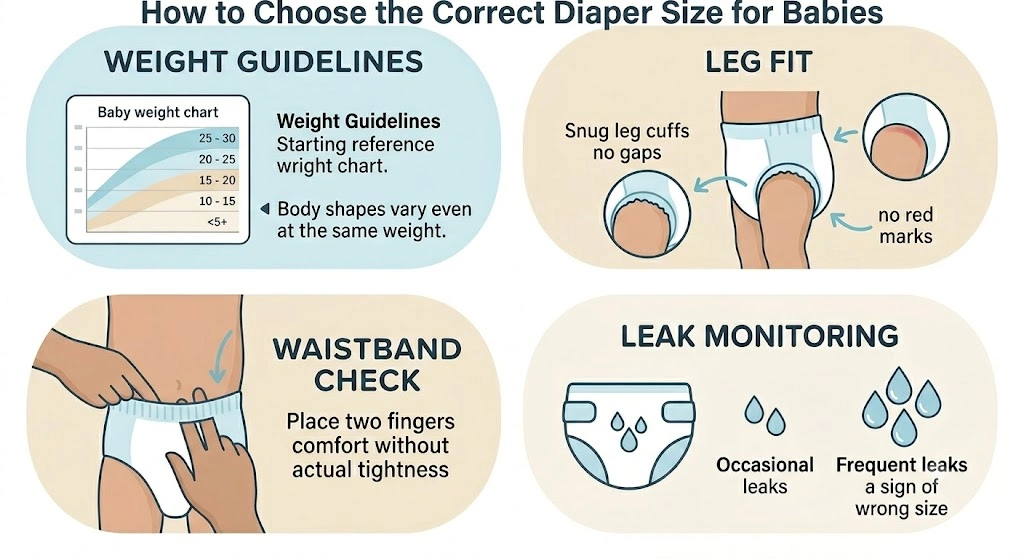
Start With Weight Guidelines
Manufacturers typically provide recommended weight ranges for each size.
These charts are useful starting points, but they should not be your only consideration.
Children of the same weight can have very different body shapes.
Check the Leg Fit
The leg cuffs should sit comfortably against your child’s skin without leaving deep marks.
There should be no visible gaps when your child is standing or moving.
Examine the Waistband
A properly fitted waistband should feel secure but not restrictive.
As a general rule, you should be able to fit two fingers comfortably between the waistband and your child’s body.
Monitor Leak Frequency
Occasional leaks may happen for many reasons.
However, if leaks become more frequent despite regular diaper changes, sizing should be one of the first things you evaluate.
Pull-Up Size vs. Absorbency: Which Matters More?
Parents often debate whether leaks are caused by poor absorbency or incorrect sizing.
The truth is that both factors work together.
Even the most absorbent pull-up can leak if it doesn’t fit properly. Likewise, a perfectly sized pull-up may still leak if it cannot handle your child’s output, especially overnight.
For most daytime leaks, fit is usually the first thing to investigate.
For overnight leaks, both fit and absorbency should be considered.
Conclusion
If your pull-up diapers are leaking, don’t assume the product is defective or lacks absorbency. In many cases, the real issue is sizing.
A pull-up that is too small can become compressed and uncomfortable, while a pull-up that is too large may leave gaps around the waist and legs. Both situations can result in leaks.
By paying attention to fit, comfort, and leak patterns rather than relying solely on weight charts, parents can often solve leakage problems quickly and improve their child’s overall comfort.
The right pull-up diaper size should feel secure, comfortable, and capable of providing reliable protection throughout the day and night.