What Panty Liners Are Meant to Do
Panty liners are designed for light, everyday protection. They are often used for vaginal discharge, light spotting, or as backup during the start or end of a period. For many people, they feel like a simple convenience—small, thin, and easy to wear. That said, comfort can vary more than expected, especially when liners are worn for long stretches.
Compared with other Panty Liners manufacturer, these products are typically lighter and less absorbent than menstrual pads. They are not meant for heavy flow, and they are also not a solution for persistent irritation or unusual discharge. Still, when used appropriately, they can be a practical part of a routine.
The primary role of a panty liner is to act as a daily shield against moisture and light discharge, helping users feel fresh throughout the day. Many people find them particularly useful during ovulation, when natural discharge tends to increase, or in the days immediately before and after menstruation. Unlike full-size pads, liners are designed to be unobtrusive—thin enough that they are barely noticeable under clothing, yet absorbent enough to handle the small amounts of fluid the body naturally produces. This balance between discretion and functionality is what makes them a staple in many personal care routines.
How Liners Differ from Other Feminine Hygiene Products
It is important to understand where panty liners sit within the broader category of feminine hygiene products. While they share some similarities with menstrual pads, there are key differences that affect how and when each should be used. Pads are thicker, more absorbent, and designed to manage moderate to heavy menstrual flow over several hours. Liners, by contrast, are engineered for trace amounts of moisture and are not intended to handle anything beyond light spotting. Using a liner in place of a pad during heavier flow days can lead to leaks, discomfort, and skin irritation from prolonged contact with moisture-saturated material.
Are Always Panty Liners Safe for Daily Use?
The short answer is: often yes, but not always for everyone. Safety usually depends on skin sensitivity, how long the liner is worn, and whether the product is changed often enough. In everyday use, many people do well with liners. Others notice irritation after repeated wear, especially if the liner traps heat or moisture.
Daily use safety is not a one-size-fits-all determination. What works comfortably for one person may cause noticeable discomfort for another, and the reasons are rarely mysterious. The vulvar skin is among the most sensitive on the human body, with a thinner epidermal layer and a higher density of nerve endings than most other areas. This makes it particularly reactive to friction, chemical irritants, and prolonged exposure to moisture. When a panty liner covers this area for eight, ten, or twelve hours a day, the cumulative effect of heat, humidity, and physical contact can gradually break down the skin’s natural protective barrier.
Why daily use may work for some people
- They provide a clean, dry feeling during the day
- They can help manage normal discharge
- They may offer backup protection in low-flow situations
For individuals with predictable, light discharge patterns, daily liner use can be a low-risk habit. The key is consistency in changing the liner and choosing products that align with individual skin tolerance levels.
When daily use may become a problem
●The adhesive area rubs against sensitive skin
●Moisture builds up over time
●Fragranced products trigger irritation
●The liner is left on too long
According to the Cleveland Clinic, ongoing vaginal irritation can sometimes be linked to hygiene products, friction, or moisture rather than a serious condition, but persistent symptoms should still be checked by a clinician. What begins as mild chafing can escalate into more pronounced discomfort if the underlying cause—whether it is the product material, wear duration, or an underlying skin condition—is not identified and addressed.
Ingredients and Materials to Watch
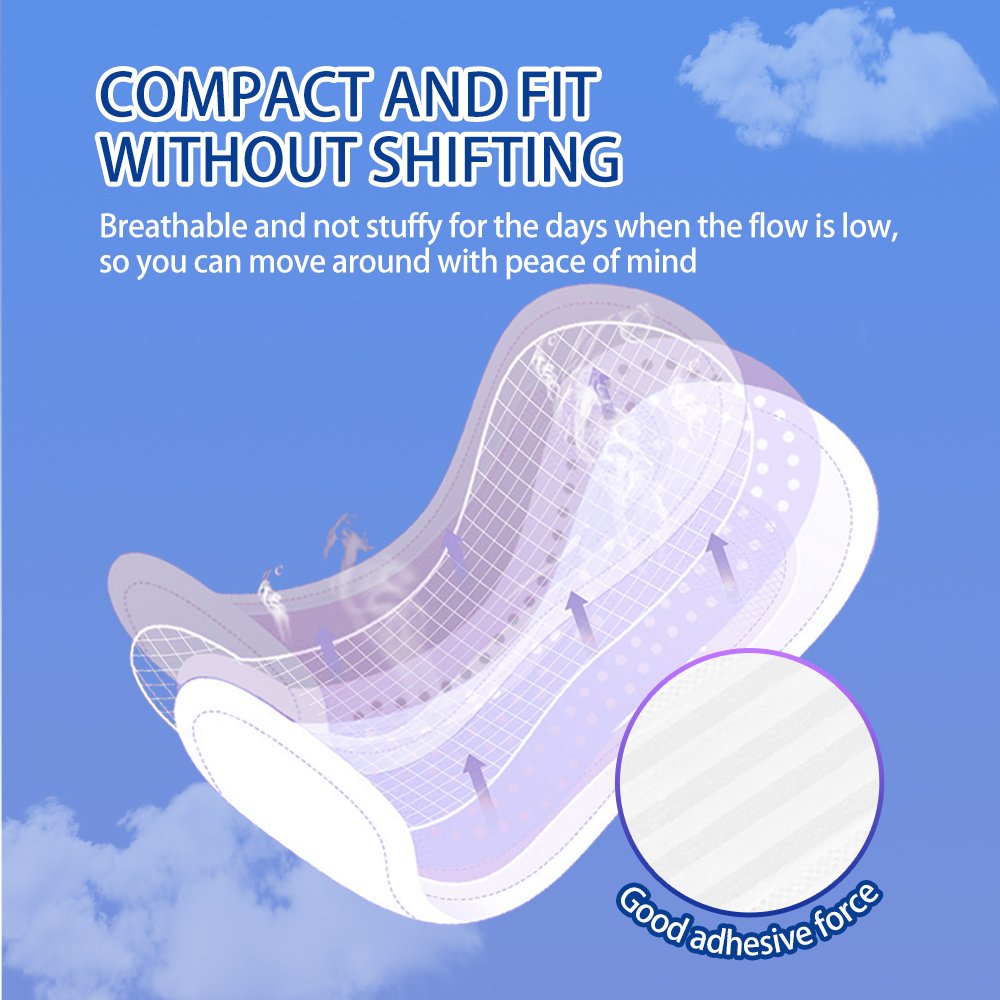
Most panty liners are built with a soft top layer, an absorbent core, and adhesive backing. That sounds simple enough, but small differences in materials can matter. Some users are especially sensitive to fragrance or certain surface textures.
The material composition of a panty liner directly influences how it interacts with the body during extended wear. The top sheet, which sits directly against the skin, is the most critical layer from a comfort and safety standpoint. Different manufacturers use different materials—some opt for cotton-based topsheets that prioritize breathability and softness, while others use synthetic non-woven fabrics that offer faster moisture wicking but may feel less natural against sensitive skin.
Core Components of a Panty Liner
| Component | What it does | Possible concern |
|---|---|---|
| Top layer | Sits against skin and helps with comfort | Can feel rough or irritating for some |
| Absorbent core | Collects moisture | May feel warm if worn too long |
| Adhesive backing | Keeps the liner in place | Can cause friction or residue |
| Fragrance | Adds scent | More likely to bother sensitive skin |
Why Unscented Options Often Feel Safer
The biggest caution is usually not the idea of a liner itself, but the combination of heat, friction, and added fragrance. For sensitive users, unscented options tend to be the safer starting point. Fragrances are among the most common causes of contact dermatitis in personal care products, and the vulvar region is uniquely vulnerable to such reactions. Even natural fragrances derived from essential oils can provoke irritation in susceptible individuals. When in doubt, opting for a fragrance-free product eliminates one major variable from the equation and makes it easier to identify whether a liner is or is not the source of any discomfort.
What Safety Advice Often Misses
A lot of safety discussions focus only on ingredients, but wear habits matter just as much. A liner that is technically fine may still feel uncomfortable if the underwear is tight, the weather is hot, or the product is not changed often enough. In practice, discomfort is often situational.
The environmental context in which a panty liner is worn can be just as influential as the product itself. Hot and humid climates, high-intensity physical activity, and extended wear without changing all amplify the natural limitations of any liner, regardless of how well it is formulated. Users who exercise while wearing a liner, for example, may find that sweat and friction combine to create far more irritation than they would experience during a sedentary day. Similarly, wearing a liner with non-breathable synthetic underwear creates a double barrier against airflow, compounding the warmth and moisture retention issues.
A few practical habits help
- Change the liner regularly.
- Choose breathable underwear.
- Avoid scented products if skin is sensitive.
- Stop using the product if itching or burning starts.
- Consider whether the issue is discharge, irritation, or another health concern.
The NHS notes that persistent vaginal itching, burning, or changes in discharge should not be ignored, especially if symptoms continue or get worse. Self-diagnosis can delay appropriate treatment, and what initially seems like a simple reaction to a hygiene product may sometimes indicate an underlying condition such as bacterial vaginosis or a yeast infection.
Panty Liners vs. Broader Feminine Care Products
Panty liners are only one part of a larger intimate care routine. Depending on the situation, a different product may be more comfortable or more appropriate. That is why many shoppers compare liners within broader Feminine Care Products rather than treating them as one-size-fits-all solutions.
Choosing the Right Option
| Situation | Better fit |
|---|---|
| Light daily discharge | Panty liner |
| Light spotting | Panty liner |
| Heavier flow | Pad |
| Ongoing irritation | Stop use and assess cause |
| Strong odor or unusual discharge | Medical guidance |
When It Makes Sense to Switch Products
If a liner causes repeated discomfort, it may be a sign to move to a different style, a different absorbency level, or no liner at all. Sometimes the best choice is simply the one that causes the least friction. Switching between product types based on the day of the menstrual cycle, activity level, and personal comfort preferences is a sensible approach that many users adopt organically over time. There is no clinical requirement to stick with a single product category, and the flexibility to choose between liners, pads, period underwear, or going liner-free depending on the situation is both practical and healthy.
Final Safety Takeaway
Always panty liners are generally safe for many people, especially when used occasionally or changed regularly. The main issues tend to come from sensitivity, fragrance, and wearing them too long. For those who like the convenience, the key is choosing the right type and paying attention to how the body responds. If a liner causes repeated discomfort, that is usually a sign to switch products—or stop using them altogether.
Safety with any feminine hygiene product is ultimately a matter of informed, attentive use. No product is inherently unsafe when used as directed, but individual physiology, habits, and environmental factors introduce variability that generic safety statements cannot fully capture. The most reliable approach is to start with the gentlest option available—unscented, breathable, and changed frequently—and adjust based on personal experience rather than marketing claims or assumptions about what should work.
FAQ
Can panty liners be worn overnight?
They can be, but overnight wear is not always ideal if the product stays damp for too long. If overnight protection is needed, a product made for longer wear may be more comfortable.
Do panty liners affect vaginal pH?
Panty liners do not usually change pH directly, but heat, moisture, or fragranced materials may contribute to imbalance or discomfort in some users.
How often should a panty liner be changed?
A good rule is to change it whenever it feels damp or uncomfortable. For many people, that means several times a day, depending on discharge and activity level.
If you’d like, I can next create a simple flowchart or an illustrative infographic prompt for this article.