Quick View Guide
What Measurements Do You Need?
Before checking a size chart, it is better to measure the body first. Do not rely only on clothing size, because pants size and diaper size are not always the same.
Waist Measurement
Use a soft measuring tape and measure around the waist area. For many adults, this is around the natural waistline or near the belly button. Keep the tape level and close to the body, but do not pull it too tightly.
The goal is to get a realistic body measurement, not the smallest possible number.
Hip Measurement
Next, measure around the widest part of the hips and buttocks. This is often more important than waist size, especially for adult diapers, because the diaper needs to cover and seal around the lower body.
For many users, the hip measurement is larger than the waist measurement. In that case, the hip number should usually guide the sizing choice.
Thigh and Rise Measurement
Not every brand requires thigh or rise measurements, but they can be useful. For example, if the user often experiences side leakage, has very slim legs, or has larger thighs, the leg opening fit becomes important.
Rise refers to how high the diaper sits from front to back. A diaper with poor rise may not provide enough coverage, even if the waist size seems correct.
How to Measure Adult Diaper Size Step by Step
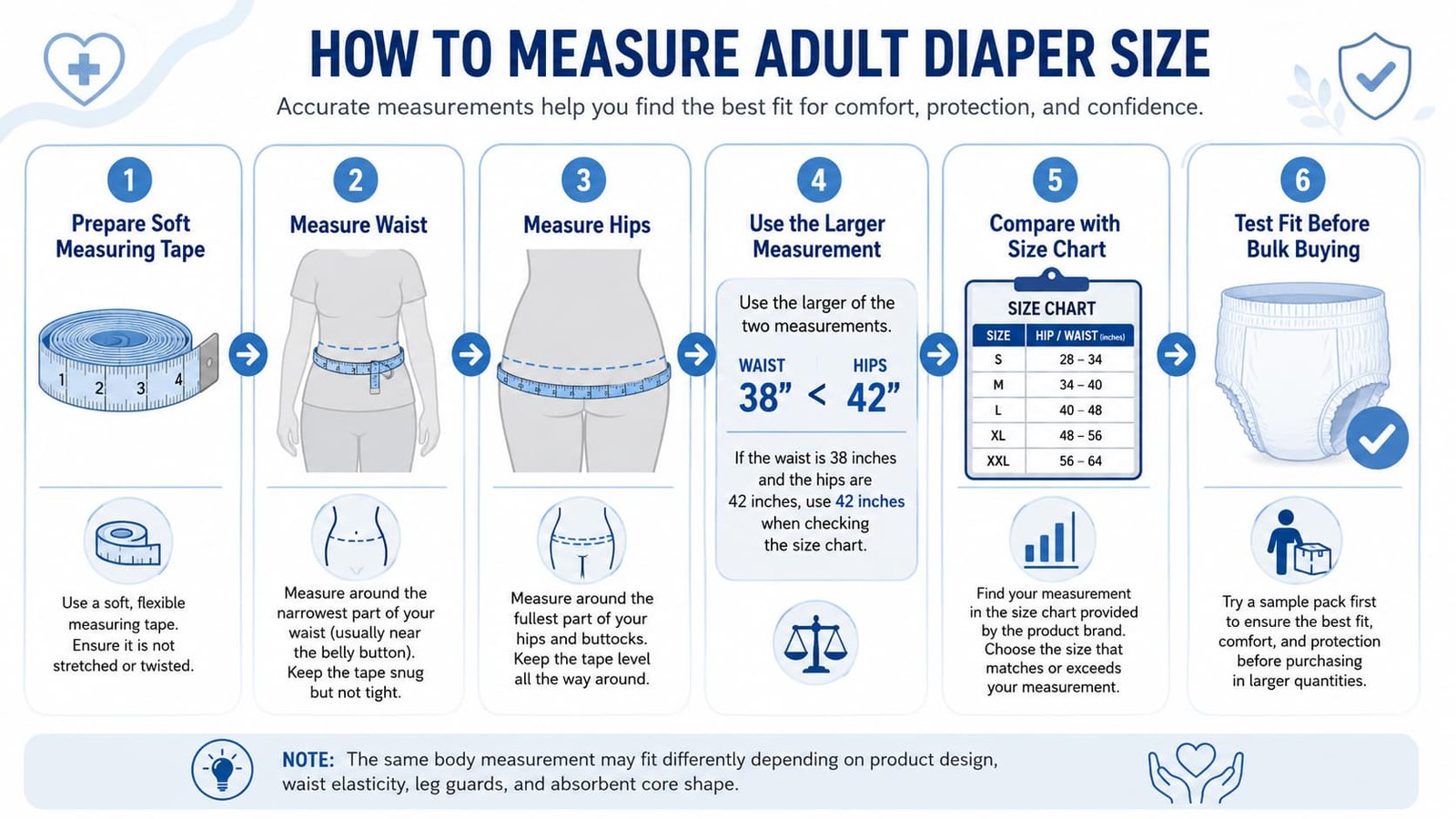
Here is a simple measuring process that works for most users:
- Prepare a soft measuring tape:
A fabric measuring tape is best because it can follow the body shape. - Measure the waist:
Wrap the tape around the waist or belly area. Keep it level and comfortable. - Measure the hips:
Measure around the fullest part of the hips and buttocks. - Use the larger measurement:
If the waist is 38 inches and the hips are 42 inches, use 42 inches when checking the size chart. - Compare with the product size chart:
Different brands may use slightly different ranges, so always check the supplier’s chart. - Test the fit before buying in bulk:
This is especially important for families, care facilities, distributors, or anyone placing regular orders.
When comparing different types of adult diaper, keep in mind that the same body measurement may fit differently depending on product design, waist elasticity, leg guards, and absorbent core shape.
Adult Diaper Size Reference Table
The table below is a general reference only. Actual sizing may vary by manufacturer, product type, and region.
| General Size | Waist / Hip Range | Common Use Situation |
|---|---|---|
| Small | 22–32 in | Slim adults or smaller body types |
| Medium | 32–44 in | Average adult users |
| Large | 44–58 in | Larger waist or hip size |
| X-Large | 58–68 in | Plus-size users |
| 2XL / Bariatric | 68 in and above | Bariatric care or special care needs |
How Should an Adult Diaper Fit?
A properly fitted adult diaper should feel snug, stable, and comfortable. It should not feel like it is falling down, but it also should not dig into the skin.
A good fit usually has these signs:
- The waist area sits securely without rolling down.
- The leg openings touch the skin without large gaps.
- The tapes or waistband fasten smoothly.
- The absorbent core stays centered.
- The user can sit, stand, walk, or lie down without major shifting.
- There are no deep red marks after wearing.
For tape-style briefs, the side tapes should not be pulled to the very edge with too much tension. If the tapes barely reach or the front panel is stretched too tightly, the size may be too small.
For pull-up style adult diapers, the waistband should feel similar to protective underwear. It should stretch comfortably, but if it slides down during walking, it may be too large or not shaped well for the user’s body type.

Common Adult Diaper Sizing Mistakes
Sizing problems are very common, especially when someone is buying adult diapers for the first time. Some mistakes look small, but they can lead to daily discomfort or frequent leakage.
Common mistakes include:
- Choosing by body weight only
- Buying the same size as regular underwear
- Ignoring hip measurement
- Assuming all brands fit the same
- Choosing a larger size automatically when leakage happens
- Buying full cases before testing samples
- Not checking fit while sitting or lying down
One especially common mistake is sizing up because the diaper leaks. It sounds logical, but it does not always work. If leakage is caused by gaps around the legs, a larger size may make the problem worse.
What If You Are Between Two Sizes?
Being between two sizes is one of the most frustrating situations. A medium may feel tight, while a large may feel loose. In this case, the best choice depends on body shape, mobility, and product type.
For users with a larger waist but slimmer legs, a larger size may create leg gaps. A tape-style adult brief may work better because the tabs allow more adjustment. For active users, a pull-up style product may need a more exact waist and hip fit.
A practical approach is:
- Try the smaller size if the diaper still closes comfortably and does not leave marks.
- Try the larger size if the smaller one restricts movement or coverage.
- Check the leg seal, not just the waist.
- Test the diaper while sitting and walking.
- For nighttime use, pay more attention to back coverage and absorbency placement.
For B2B buyers, sample testing is even more important. Nursing homes, care centers, and distributors should avoid choosing sizes only from a chart. Real fitting tests can prevent overstocking the wrong size.
Adult Diaper Type Also Affects Sizing
Different adult diaper styles fit differently, even when the size label is the same.
| Product Type | Best For | Sizing Note |
|---|---|---|
| Tape-style adult briefs | Caregiving, limited mobility, nighttime use | More adjustable around the waist and hips |
| Pull-up adult diapers | Mobile users, daytime wear, discreet use | Needs a closer match to waist and hip size |
| Overnight briefs | Heavy leakage or long wear time | Rise, back coverage, and leg seal matter more |
| Bariatric adult diapers | Larger body types | Hip and abdominal measurement are very important |
For users who need help changing, tape-style diapers are usually easier for caregivers.
For users who can move independently, pull-up adult diapers may feel more familiar and discreet. But pull-ups are usually less adjustable, so accurate sizing becomes more important.