For most newborns, 200 diapers may last about 16 to 25 days. The exact number depends on how many diapers the baby uses each day, how quickly the baby grows, and whether the newborn size still fits properly.
Instead of guessing how many diapers your baby uses each day, select your baby’s age range below. This calculator will estimate how many days 200 diapers may last based on average daily diaper use.
How Long Will 200 Baby Diapers Last?
Select your baby’s age range to estimate how many days 200 diapers may last.
Quick Reference: How Long Will 200 Baby Diapers Last?
| Baby Age Range | Estimated Diapers Per Day | 200 Diapers May Last About |
|---|---|---|
| Newborn | 10–12 diapers/day | 17–20 days |
| 1–3 months | 8–10 diapers/day | 20–25 days |
| 3–6 months | 6–8 diapers/day | 25–33 days |
| 6–12 months | 5–7 diapers/day | 29–40 days |
| 12+ months | 4–6 diapers/day | 33–50 days |
This table is based on general daily diaper use by age. Actual usage may vary depending on your baby’s routine, feeding habits, and how often you change diapers.
How Many Diapers Does a Newborn Use Per Day?
Newborns usually need frequent diaper changes. In the first few weeks, many babies may use around 8 to 12 diapers per day, and some may use even more during certain days.
This happens because newborns feed often, sleep in short cycles, and have frequent wet or soiled diapers. Parents may also change diapers more often to keep the baby comfortable and reduce the risk of diaper rash.
In real life, diaper usage is not always the same every day. Some days a baby may use fewer diapers, while other days may require more changes because of feeding changes, bowel movements, leaks, or sensitive skin.
Why 200 Diapers May Not Last the Same for Every Newborn
Although the calculation is simple, the actual usage time can vary from baby to baby. Here are the main factors that affect how long 200 diapers will last.
1. Daily Changing Frequency
The biggest factor is how often the baby is changed. A newborn who uses 8 diapers per day will make 200 diapers last much longer than a baby who uses 12 or 14 diapers per day.
Many parents change diapers:
- after feeding
- after bowel movements
- before naps or bedtime
- when the diaper feels wet or full
- when the baby shows discomfort
For newborns, more frequent changes are common because their skin is delicate and needs to stay clean and dry.
2. Baby’s Size and Growth Speed
Newborns grow quickly. Some babies stay in newborn-size diapers for several weeks, while others move to Size 1 very soon. Larger babies may even skip newborn size almost completely.
This is why buying too many newborn-size diapers can sometimes be risky. Even if the diapers are not used up, the baby may outgrow them before the box is finished.
For parents, this means 200 newborn diapers may be useful, but it is usually not wise to stockpile too many newborn-size boxes before knowing the baby’s actual size and fit.
3. Feeding Patterns
Feeding can also affect diaper use. Breastfed and formula-fed babies may have different bowel movement patterns. Some newborns have several soiled diapers per day, especially in the early stage.
When feeding frequency changes, diaper usage may also change. Growth spurts, temporary digestive changes, or minor illness can also increase the number of diaper changes needed in a day.
4. Diaper Fit and Leakage
If a diaper does not fit well, parents may need to change it more often because of leaks. A diaper that is too small may leave marks or leak around the legs or waist. A diaper that is too large may not seal properly.
Good diaper fit can help reduce unnecessary changes. If leaks happen frequently, it may be a sign that the baby needs a different size, a different brand, or better leg cuff adjustment.
Is 200 Newborn Diapers Too Many?
For many families, 200 newborn diapers is a reasonable amount, but it is not always the perfect amount for every baby.
If the baby uses about 10 diapers per day, 200 diapers may last around 20 days. This fits well with the early newborn stage. However, if the baby grows quickly or starts in a larger weight range, the newborn size may become too small before all 200 diapers are used.
For this reason, many parents prefer to prepare a moderate amount of newborn diapers and then buy more after checking the baby’s size, fit, and skin comfort.
A practical approach is:
- prepare some newborn-size diapers
- prepare more Size 1 diapers
- avoid opening all boxes too early
- check the store or supplier’s return or exchange policy
- test the fit before buying too many of the same size
This helps reduce waste and makes diaper buying more flexible.
Should Parents Buy Newborn Size or Size 1?
This is one of the most common questions when preparing diapers before birth.
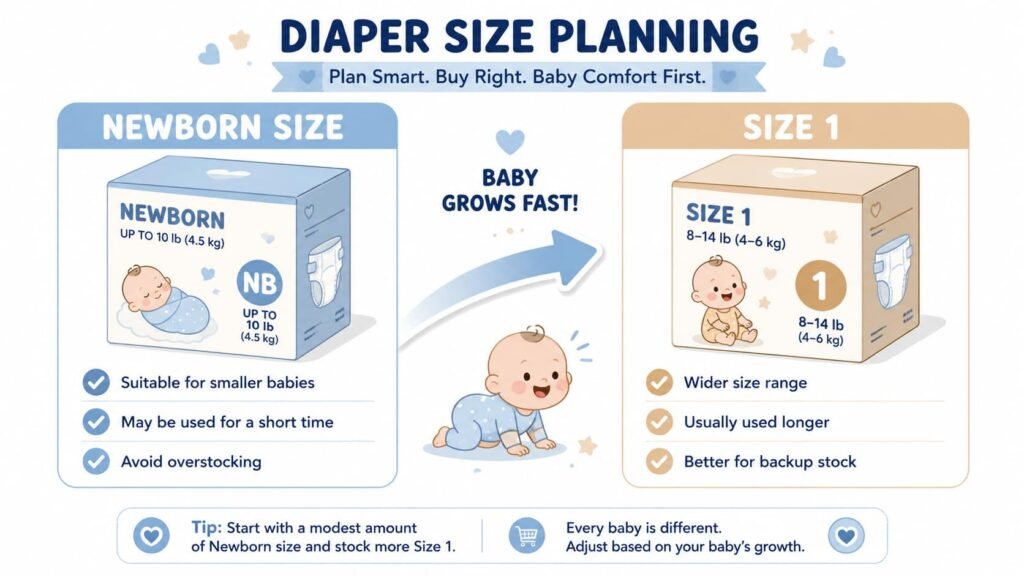
Newborn-size diapers are designed for smaller babies, but not every baby will need them for long. Size 1 diapers usually cover a wider weight range and may be used for a longer period.
If the baby is expected to be small, newborn diapers may be useful. If the baby is expected to be larger, parents may want to prepare fewer newborn diapers and more Size 1 diapers.
A balanced choice is usually better than buying too much of one size. For example, parents can prepare one box of newborn diapers and one or two boxes of Size 1 diapers, then adjust after the baby arrives.
Tips for Buying Diapers in Bulk
Buying diapers in bulk can help reduce the cost per diaper, but it should be done carefully, especially for newborn sizes.
Here are some useful tips:
Start with a Reasonable Quantity
For newborn diapers, 200 pieces is often a practical starting point. It is enough for the first few weeks for many babies, but not so much that it creates a high risk of waste.
Do Not Stock Too Much of One Size
Babies grow fast, and diaper size changes can happen sooner than expected. It is usually safer to buy more Size 1 or Size 2 diapers than to overstock newborn size.
Test the Brand and Fit First
Different diaper brands may fit differently. Some are better for slim babies, while others may work better for babies with fuller thighs or waistlines. Before buying large quantities, it is helpful to test whether the diaper fits well and prevents leaks.
Consider Daytime and Nighttime Needs
Newborns wake often, but as babies grow, nighttime absorbency becomes more important. Parents may eventually need diapers with better absorbency for longer sleep periods.
diapers are important, but Size 1 and Size 2 often support a longer purchasing cycle as babies continue to grow.
Conclusion
So, how long will 200 diapers last a newborn?
In most cases, 200 diapers will last about 16 to 25 days, depending on how many diapers the baby uses each day. If a newborn uses around 8 diapers per day, 200 diapers may last about 25 days. If the baby uses 10 to 12 diapers per day, the same quantity may last around 16 to 20 days.
For parents, 200 newborn diapers can be a useful starting amount, but it is better not to overstock newborn size before knowing the baby’s actual fit and growth speed. For retailers and distributors, this usage estimate can help with inventory planning, size mix decisions, and bulk procurement strategies.
By understanding real newborn diaper consumption patterns, both families and business buyers can make smarter, more practical diaper purchasing decisions.