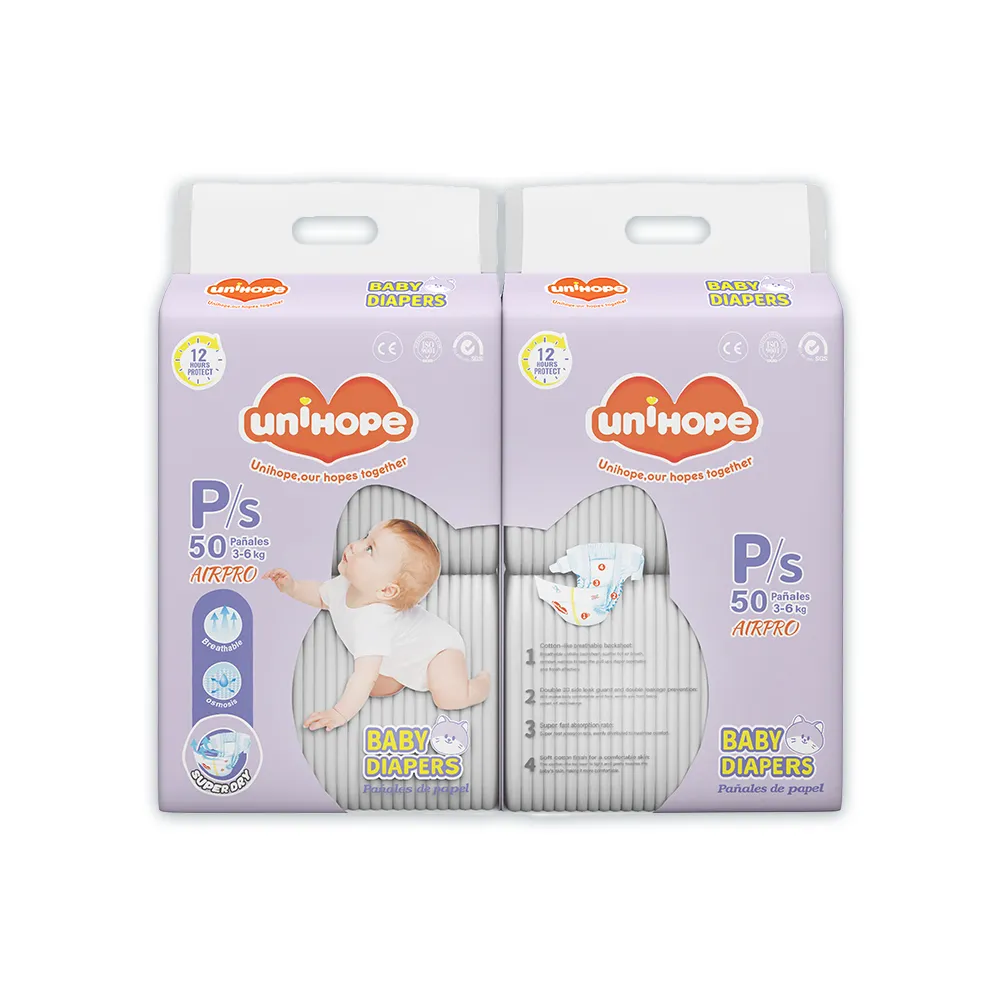
The quantity of baby diapers used for newborns is one of the most important concerns for new parents. When caring for a delicate baby, how to change diapers appropriately not only affects economic costs but also directly impacts the baby’s health and comfort.

I. Changes in the quantity of baby diapers used for newborns
The quantity of baby diapers used for newborns is not a fixed number, but rather varies with age, feeding methods, and individual differences. It can be roughly divided into the following stages.
1. 1-3 days after birth
Newborn babies are in a physiological dehydration period, with low urine output, requiring approximately 2-4 baby diapers changes per day. The focus during this stage is not on quantity, but on observing the traces on the diaper to confirm that the baby has begun normal excretion. Generally, the first urination should occur within 24 hours of birth, and the first bowel movement within 48 hours.
2. 4–14 days after birth
As breastfeeding or formula feeding becomes more regular, your baby’s urine output and bowel movements will significantly increase. Exclusively breastfed newborns may have 4–8 bowel movements per day, sometimes even after each feeding, plus 6–8 urinations, resulting in 8–12 baby diapers changes per day. Formula-fed babies have fewer bowel movements, approximately 2–5 times daily, but their urine output is equally abundant, with a total diaper usage of about 6–10 diapers per day. During this stage, urine should be pale yellow and transparent, while stools gradually transition to a golden yellow paste-like consistency.
3. 2 weeks later
Around the time of the full moon, the newborn’s digestive system gradually matures, and the frequency of bowel movements decreases significantly. Some breastfed babies may only have a bowel movement every few days, but urine output remains stable, averaging about 6-8 times per day. Therefore, the number of diapers used may decrease slightly, typically maintaining at 6-8 baby diapers per day. As long as the baby’s weight gain is normal and their overall condition is good, even if only 5-6 diapers are changed per day, this may still be within the normal range.
II. Key points for changing baby diapers scientifically
1. Frequency of diaper changes
Newborn babies should have their diapers changed every 2-3 hours, and immediately after a bowel movement. In addition, baby diapers should be changed at least 1-2 times during the night to prevent leakage.
2. Observation signal
If there is an unpleasant odor or your baby is crying, check the diaper immediately and change it if necessary. In addition, after your baby has a bowel movement, wash their bottom with warm water, pat it dry, and apply diaper cream.
3. Prevent diaper rash
During summer or when your baby sweats a lot, you need to increase the frequency of changing baby diapers. In addition, choosing diapers or diaper cream containing zinc oxide is more beneficial for your baby’s skin

III. Choosing the right baby diapers
Newborns have very sensitive skin, so choosing the right baby diapers and proper care techniques are very important for newborns.
1. Baby diaper manufacturer
The primary principle is to choose a reputable baby diaper manufacturer. Such brands have typically been tested by the market over the long term and are more reliable in terms of raw material control and production standards, thereby reducing risks such as allergies.
2. Baby diaper material
Baby diaper material is a key consideration. Prioritize soft fabrics to avoid friction against the baby’s delicate skin. Breathable materials can reduce diaper rash, especially important in hot and humid weather.
3. Choose the right size
Baby diaper material is a key consideration. Prioritize soft fabrics to avoid friction against the baby’s delicate skin. Breathable materials can reduce diaper rash, especially important in hot and humid weather.
4. Waist elasticity
Waistband elasticity is also important. A waistband with good elasticity can stretch freely with the baby’s movements, fitting snugly around the waist without leaving marks, allowing the baby to roll over and kick freely, ensuring a more peaceful sleep.
Conclusion
The daily diaper usage for newborns should be adjusted dynamically. In the first week, start with 6 diapers and gradually increase to over 12 diapers. After the first month, stabilize at 6–12 diapers. Increase usage during breastfeeding, summer, or when the baby has diarrhea. The core principles are frequent changes and observation. Check every 2–3 hours, clean immediately after bowel movements, and prioritize breathable materials. Actual usage varies by baby, and parents can optimize the changing schedule by recording the baby’s elimination patterns. Scientific care not only reduces the risk of diaper rash but also lays a healthy foundation for the baby.