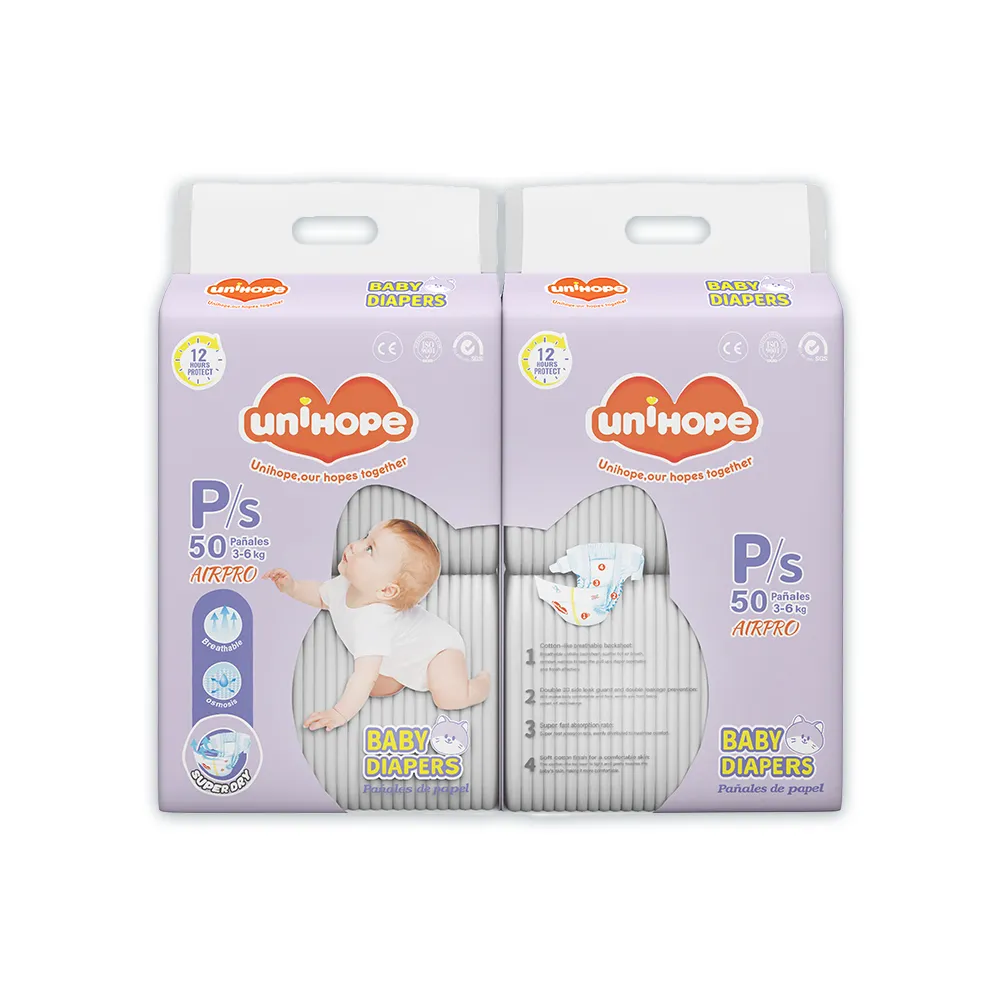
Choosing the right baby diaper size is not always as simple as following the weight range on the package. Many parents notice that a baby diaper can still be “within the recommended weight,” but it may already feel tight, leak often, or leave red marks on the baby’s skin.
In most cases, the best way to judge diaper size is to look at the actual fit. Frequent leaks, deep red marks, shifting tabs, a low-rise fit, and increased discomfort during changes can all be signs that your baby may need the next size up.
This guide explains the common signs of a too-small diaper, how to check the fit, and what to do before buying the next size in bulk.
I. Frequent Leaks or Blowouts
Frequent leaks are one of the most common signs that a baby may need a larger diaper size. Parents may notice wet patches on clothes, leaks after naps, or blowouts around the legs or back.
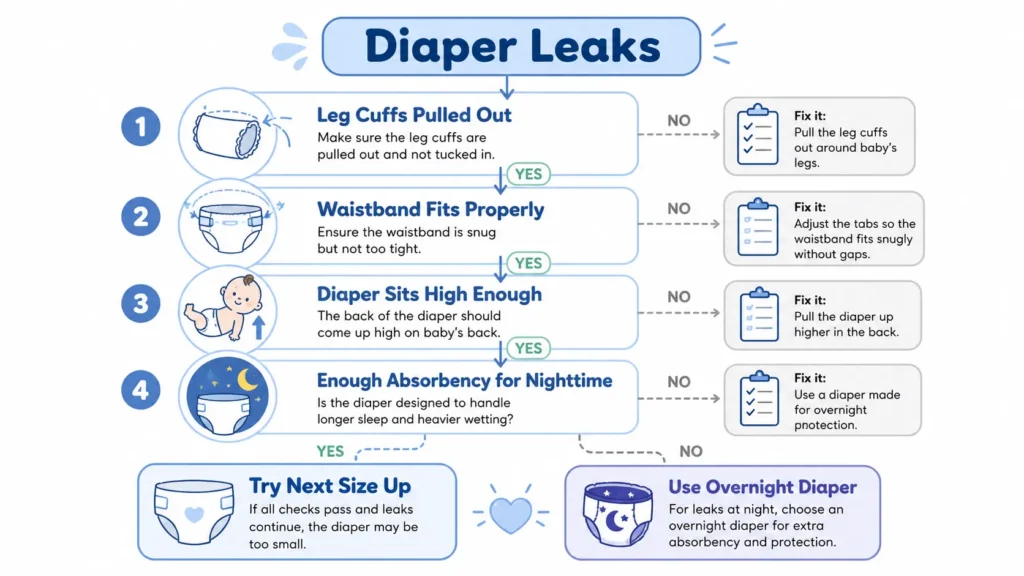
However, leaks do not always mean the diaper size is wrong. Before sizing up, check whether the diaper is fastened evenly, the leg cuffs are pulled out, and the waistband sits high enough on the baby’s waist. If the diaper is put on correctly but leaks still happen often, the current size may be too small or not absorbent enough for the baby’s needs.
A diaper that fits well should cover the baby’s bottom fully, sit comfortably around the waist, and leave no large gaps around the legs.
Leaks at Night
If leaks mostly happen at night, the problem may be related to absorbency rather than daytime fit. Some babies stay in one diaper for many hours overnight, so the diaper may become fully saturated. In this case, parents can try overnight diapers, a more absorbent diaper style, or one size up for nighttime use.
Leaks on Clothes
Leaks on clothes happen when a diaper cannot keep up with a baby’s movements or output. If a caregiver sees wet patches after naps or playtime, it is a clear sign to size up diapers. Sometimes, even after a fresh change, leaks still happen. This shows the current diaper size does not fit well anymore.
II. Deep Red Marks Around the Legs or Waist
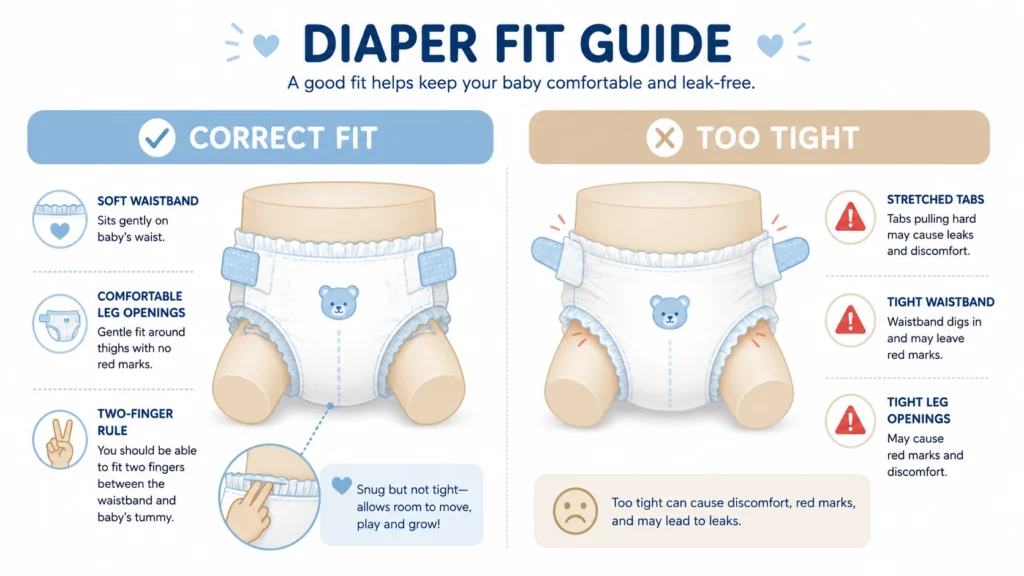
Red marks can be a clear sign that the diaper is too tight, especially when they appear around the thighs, waist, or belly. A light temporary mark may happen when a baby moves a lot, but deep red lines, repeated indentations, or irritated skin usually mean the diaper is pressing too firmly.
The leg elastic should sit gently around the thighs without digging into the skin. The waistband should also feel secure but not tight. A simple way to check the fit is to slide two fingers under the waistband. If this feels difficult, the diaper may be too small.
If red marks continue even after adjusting the diaper, it may be time to size up or try a different diaper shape.
III. Diaper Tabs Are Hard to Fasten
Diaper tabs should fasten comfortably near the front center of the diaper. If the tabs are pulled too far toward the sides, keep popping open, or feel difficult to secure, the diaper may be too small.
When a diaper fits properly, the tabs should close without strong pulling. The front panel should sit smoothly against the baby’s belly, and the diaper should not look stretched. If the tabs leave pressure marks or rub against the thighs, parents may need to move up a size or choose a diaper with a better body fit.

IV. The Diaper Sits Too Low on the Waist
A diaper that has become too small may start to look low-rise. It may no longer reach high enough on the baby’s waist, or it may fail to cover the bottom fully. This can make leaks and blowouts more likely, especially when the baby moves, crawls, or sleeps in different positions.
A well-fitting diaper should sit comfortably below the belly button and provide enough coverage at the back. If the diaper looks short, narrow, or stretched, it may be time to try the next size.
V. Baby Seems Uncomfortable During Diaper Changes
Babies cannot explain when a diaper feels tight, but they may show discomfort through body language. If a baby suddenly becomes fussy during diaper changes, pulls at the diaper, arches the back, or seems uncomfortable when sitting or crawling, the diaper fit may be part of the problem.
Tight diapers can pinch the waist, rub the thighs, or limit movement. If fussiness appears together with leaks, red marks, or hard-to-fasten tabs, parents should consider trying the next size up.
Should You Follow the Weight Chart or the Actual Fit?
Diaper weight charts are helpful, but they should not be the only standard. Babies with the same weight can have different body shapes. Some babies have chunkier thighs, some have rounder bellies, and some are longer and slimmer.
This is why a diaper may feel too small even if the baby is still within the listed weight range. On the other hand, some babies can stay in a size slightly longer if the diaper still fits well and does not leak.
The best approach is to use the weight chart as a starting point, then check the actual fit. If the diaper leaks often, leaves deep red marks, sits too low, or feels hard to fasten, the baby may be ready for the next size.
What If the Size Is Right but the Fit Still Feels Wrong?
Sometimes the problem is not the size, but the diaper shape. Different diaper brands may fit differently even when they show similar weight ranges. One brand may work better for babies with chunky thighs, while another may fit slimmer babies more comfortably.
If the diaper weight range seems correct but leaks, gaps, or red marks still happen, parents can try a different diaper style before changing sizes completely. For businesses, daycare centers, or wholesale buyers, this is also why testing samples before bulk purchasing is important.
Conclusion
Choosing the right baby diaper size is about more than reading the weight range on the package. Parents should also look at how the diaper fits in real life.
If leaks happen often, red marks appear around the thighs or waist, tabs are difficult to fasten, the diaper sits too low, or the baby seems uncomfortable, it may be time to try the next size up. For nighttime leaks, a more absorbent diaper or one size up for overnight use may also help.
Because every baby’s body shape is different, the best diaper size is the one that fits securely, protects against leaks, and keeps the baby comfortable throughout the day.
For more information, you can check: How to Choose the Right Baby Diaper Size for Your Little One.