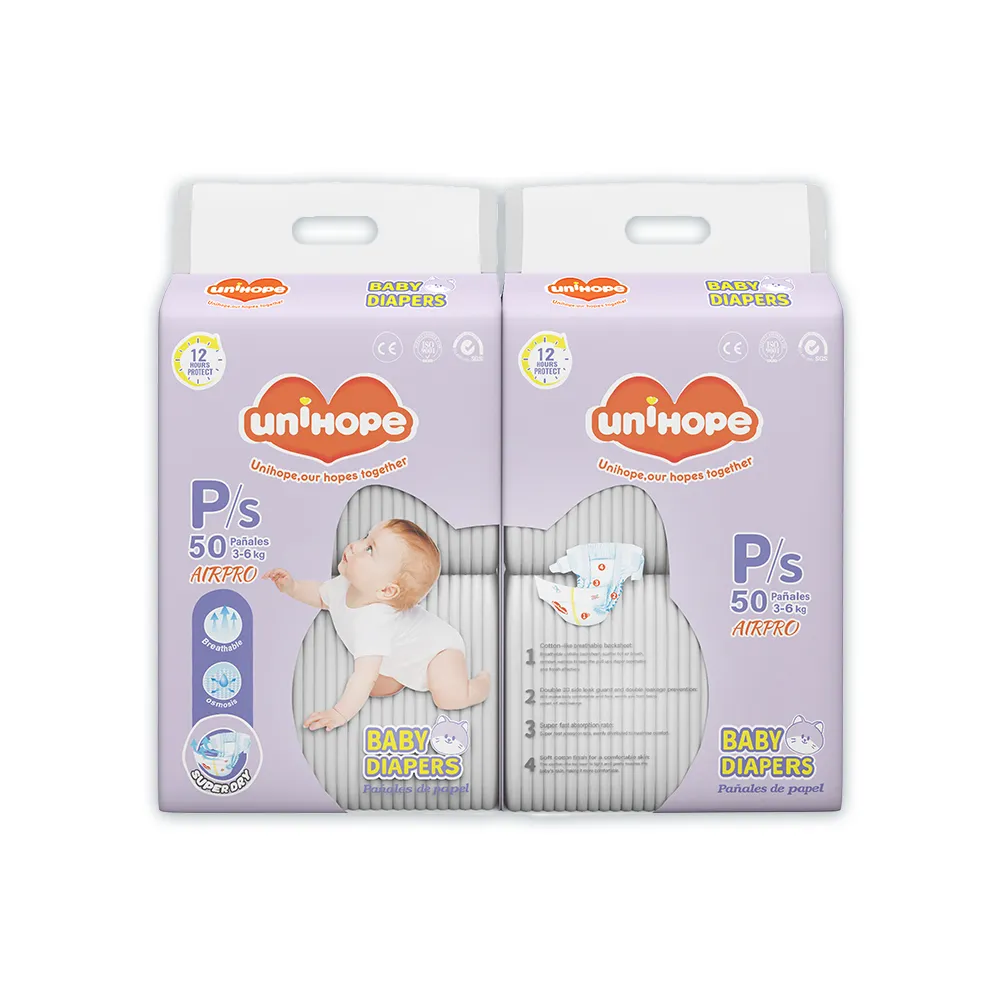
Infants can typically begin wearing baby diapers shortly after birth, but the specific usage methods and diaper types should be adjusted promptly based on the baby’s age, weight, and care routine. Below are usage recommendations and related precautions for different stages:

I. Neonatal period (0–3 months)
1. Start of use time
Hospitals will use disposable diapers immediately after birth for convenient care. Newborns can use diapers right after birth, whether cloth or disposable. Since newborns urinate frequently (about 20 times daily) and produce small amounts of waste, timely changes are necessary to keep their skin dry and prevent diaper rash.
2. Choosing the right size of baby diapers
Baby diaper sizes are primarily selected based on the infant’s current weight. While standards vary slightly between brands, the general guidelines are as follows (adjustments may be needed for specific brands):
| Diaper size | Baby weight(kg) | Remark |
| NB | 0-5kg | ⩽1 month |
| S | 3-5kg or 4-8kg | 1-3 months |
| M | 5-10kg or 6-11kg | 3-6 months |
| L | 9-14kg or 8-13kg | 6-12 months |
| XL | 12-17 kg or 12 kg+ | ⩾1 year |
| XXL/XXXL | 15kg+ | ⩾18 months |
Note:
1. Weight ranges overlap (e.g., size M covers 5-11kg). Adjust based on your baby’s actual body size.
2. If your baby’s weight falls between two sizes (e.g., 8kg), choose the larger size (e.g., size L) to avoid a tight fit.
3. Frequency of replacement
Baby diapers should be changed immediately after each bowel movement or urination, especially after a bowel movement, when the bottom must be thoroughly cleaned and dried. At night, diaper changes may be spaced out appropriately (e.g., every 4 hours), but highly absorbent baby diapers should be used.

II. Infants 1-6 months
1. Adjustment of diaper types
If your baby weighs over 4 kilograms or is growing rapidly, switch to size S disposable baby diapers (suitable for 3-6 months). Cloth diapers can still be used, but pay attention to folding and securing them properly to prevent leaks.
2. Usage recommendations
During the day, try to reduce the time your baby spends in disposable baby diapers. Let them go diaper-free to allow their skin to breathe, which helps lower the risk of diaper rash. At night or when going out, prioritize using diapers for convenience during activities and sleep.
III. 6 months or longer
1. Gradually transition to training pants
Once your baby starts solid foods and their bowel movements become more regular, you can try using breathable baby training pants during the day while continuing to use disposable diapers at night. If your baby shows resistance to diapers or is very active, opt for larger-sized diapers with better elasticity.
2. Observe developmental signals
When a child can express their need to use the toilet (such as through words or actions), toilet training can typically begin gradually between the ages of 1.5 and 3 years old. This helps reduce dependence on disposable diapers.

IV. Precautions for using baby diapers
1. Size Selection
Adjust diaper size promptly based on your baby’s weight and waist circumference. A diaper that is too tight may affect hip development, while one that is too loose may cause leaks. Regularly check the fit of the diaper, especially around the thighs and waist.
2. Preventing rashes
After each baby diaper change, clean the diaper area with warm water and gently pat dry. Then apply diaper cream to form a protective barrier. Additionally, avoid using plastic diaper liners, opt for breathable cotton diaper liners instead.
3. Health and safety
If using cloth diapers, they must be thoroughly washed, sterilized, and air-dried to prevent residual detergent from irritating the skin. If using disposable diapers, ensure the adhesive tabs are securely fastened to prevent loosening and rubbing against the baby’s skin.
Conclusion
Babies can start wearing diapers from birth, primarily using disposable baby diapers in the early stages, then gradually transitioning based on developmental progress. The key is to keep the skin clean and dry, choose the appropriate size and material, and closely monitor the baby’s comfort and health. If persistent diaper rash, skin rashes, or abnormal bowel movements occur, prompt medical attention is recommended.