Making the decision to partner with an adult diaper manufacturer is a significant commercial step. It’s not like ordering office supplies. The stakes are incredibly high, impacting end-user health, brand reputation, and complex logistics. The market for adult incontinence products is expanding rapidly, and with that growth comes a flood of potential suppliers, all claiming to be the best.
The temptation is always to look at the price sheet first. It’s a natural instinct. But in this specific industry, that’s almost always a mistake. A low-cost-per-unit can quickly be erased by product failures, recalls, or supply chain breakdowns.
Before you even request a quote, you need a checklist. This is about vetting a partner for a long-term relationship, not just a supplier for a single order. Here are five essential things you must check before signing a contract.
1. The “On-Skin” Reality: Product Materials and Core Tech
A sample can look and feel great in your hand. But the real test is how it performs over hours of use. You must dig into the specifics of the materials.
It’s what’s inside that counts. The “core” of the diaper is everything. Ask potential partners about their SAP (Super Absorbent Polymer). Where is it from? What is its absorption and retention rating? Just as important is the fluff pulp it’s mixed with. A good adult diapers manufacturer has a core design that wicks moisture away fast to keep the skin dry. A poor one just stuffs it with low-grade materials that can feel lumpy and fail to lock liquid away.
This directly impacts skin health. With issues like incontinence-associated dermatitis (IAD) being a major concern in healthcare, the materials touching the skin are critical. Is the topsheet (the inner lining) truly non-woven and hypoallergenic? Is the backsheet (the outer layer) a breathable, cloth-like material, or is it an old-school plastic that traps moisture and heat? These details are the difference between a product that offers dignity and one that causes harm.
2. The Paper Trail: Certifications and Compliance
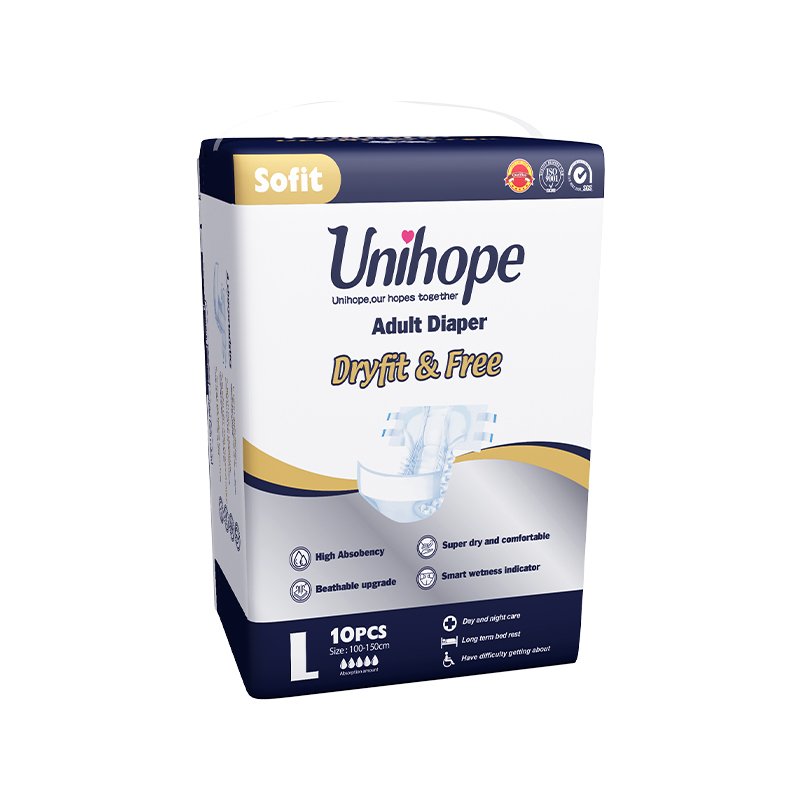
This is the part everyone wants to skip, but it’s your primary insurance policy. Any legitimate adult diaper manufacturer will have their certifications ready to go. If they hesitate or make excuses, that’s a massive red flag.
This isn’t just about a “certificate of quality.” You need to see specific, internationally recognized credentials.
ISO 9001:2015: This is the baseline. It proves they have a documented Quality Management System. It means they have processes they must follow to ensure consistency.
ISO 13485:2016: This one is even better. It’s the ISO standard for medical devices. Since adult diapers often fall into this category (especially in clinical settings), it shows a much higher level of traceability, safety, and regulatory compliance.
FDA and/or CE Marking: If you plan to sell in the United States or the European Union, these are non-negotiable. The manufacturer must be registered with the FDA or have the CE mark, proving they meet the stringent safety and health requirements of those markets.
Don’t just accept a logo on a webpage. Ask for the actual certification documents and check their validity.
3. Factory Insight: R&D and Production Technology
You need to know who you’re really dealing with. Are they an innovative manufacturer with their own R&D labs, or are they simply an assembler or a trading company reselling someone else’s product?
An innovative partner is always working on the next thing: thinner, more discreet products with higher absorbency. They are the ones who can help you build a “good, better, best” product lineup. Ask them about their R&D team. What have they improved in the last year?
Then, look at their production floor (even if it’s a virtual tour). Are they using modern, high-speed lines? These often have automated quality checks, like vision systems that scan every single product for defects. Older, slower lines rely more on manual inspection, which is far more prone to human error and inconsistency. The technology in the factory is a direct reflection of the quality of adult diapers you’ll receive.
4. Supply Chain Stability
If the last few years have taught us anything, it’s that a supply chain is only as strong as its weakest link. A great product is useless if your manufacturer can’t get it to you.
Ask tough questions about their raw materials. Where do they source their fluff pulp, SAP, and non-woven fabrics? Do they have a single supplier for these critical components? A single-source dependency is a huge risk for your business. A good manufacturer will have redundant sourcing—multiple, pre-vetted suppliers for their key materials. This is what separates a professional operation from a fragile one
5. The Real-World Partnership: MOQs and Communication
Finally, you have to be able to work with them. This is where the business practicalities come in. The biggest barrier for many businesses, especially startups or those launching a private label, is the MOQ (Minimum Order Quantity).
A giant, tier-one factory might offer a rock-bottom price, but their MOQ might be five 40-foot containers per SKU. This is simply impossible for most. You need to find a partner whose scale matches your own. Many agile manufacturers are specifically set up to handle more flexible order sizes.
And then, just talk to them. How is their communication? Are they responsive? Do you have a dedicated contact? What happens when something goes wrong? You will be talking to these people a lot. You want a team that partners with you to solve problems, not just one that sends invoices.
Conclusion
Finding the right adult diaper manufacturer is a process of balancing cost, quality, and risk. Don’t be swayed by a slick website or a low price. Your final choice should be a partner you can trust to protect your brand and, most importantly, provide a safe, reliable, and dignified product for the people who depend on it.
If you want to learn more detailed information about how to choose a reliable adult diaper manufacturer, you can check our guide How to Choose the Right Adult Diaper Manufacturer.