It’s a topic that isn’t exactly dinner table conversation, but it’s a massive and incredibly important one. The world of adult incontinence products is growing, and it’s growing fast. We’re not just talking about a small, niche market anymore. Some reports show the global diaper market was valued at over USD 15.6 billion in 2023 and is expected to climb significantly by the end of the decade. This growth is driven by an aging global population and a very necessary, very welcome destigmatization of incontinence issues.
But for a business—whether you’re a healthcare provider, a retail chain looking to launch a private label, or a distributor—this growth means more competition. And it means the pressure is on to provide a product that doesn’t just work, but one that offers dignity, comfort, and reliability.
The single most important decision you’ll make in this process? Choosing your adult diaper manufacturer.
This choice is foundational. It’s the bedrock of your product quality, your supply chain stability, and ultimately, your brand’s reputation. It often seems like a simple matter of finding the cheapest supplier, but that’s a short-term view that almost always leads to long-term problems. Finding the right partner is a complex blend of vetting, relationship-building, and understanding the intricate details of the product itself. It’s about finding a adult diaper partner who gets it.
The Stakes: Why This Partnership is So Critical
Let’s be honest, the ripple effect of a poor-quality product in this category is significant. It’s not like selling a t-shirt that doesn’t fit right. A failing incontinence product directly impacts a user’s quality of life. It can lead to skin health issues, social anxiety, and a loss of dignity.
For your business, the stakes are just as high:
Brand Reputation: If you are a private label seller, your adult diaper manufacturer is your product. One bad batch can lead to a flood of terrible reviews, ruining the trust you’ve worked to build.
Healthcare Outcomes: In a clinical or care home setting, a sub-par product can lead to increased linen changes, higher labor costs for staff, and, most importantly, a higher incidence of issues like incontinence-associated dermatitis (IAD).
Supply Chain Disruption: What if your chosen adult diaper manufacturer can’t keep up with demand? Or they have a quality control issue that forces a recall? The disruption to your business can be catastrophic.
Choosing an adult diaper manufacturer isn’t just a procurement task; it’s a strategic partnership. You are, in essence, entrusting them with your customer’s well-being and your company’s good name.
Core Product Quality: What Really, Truly Matters
Before you can even look at a factory, you have to understand the product. It’s easy to see all adult diapers as the same, but the technology and materials involved are surprisingly sophisticated. When vetting a potential adult diaper manufacturer, you must dig deep into their product’s core components.
Absorbency and Core Technology
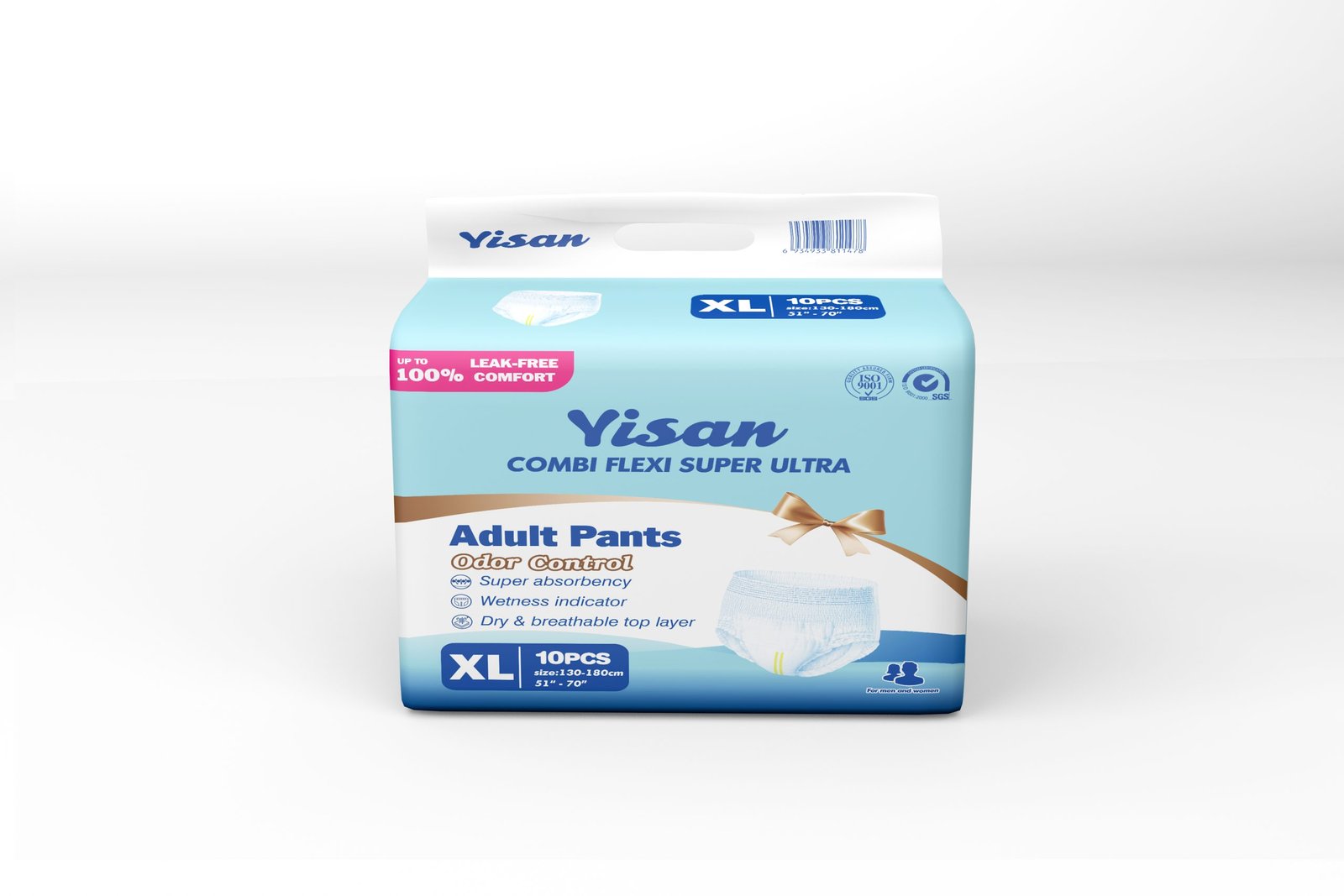
This is the number one job. The magic ingredient here is SAP (Super Absorbent Polymer). It’s a fine, granular powder that can absorb and lock away hundreds of times its own weight in liquid, turning it into a gel.
But not all SAP is created equal, and neither is the way it’s used. Ask potential manufacturers about their SAP. Where do they source it? What is its retention capacity? More importantly, how do they integrate it with the fluff pulp? A good absorbent adult diaper creates a “core” that wicks moisture away from the skin fast and distributes it evenly, preventing clumping and “wet spots.” A bad one just dumps SAP in, which can feel lumpy and fail to lock liquid away from the skin.
Skin Health and Materials
This is arguably tied with absorbency for the top spot. The user’s skin will be in contact with this product for hours at a time. This is where cutting corners becomes truly harmful.
Breathability: This is key. A good diaper uses a “cloth-like” (such as non-woven adult baby diapers) backsheet that allows air to circulate, reducing heat and humidity. That old-school, plastic-feeling backsheet is a recipe for skin breakdown. It’s a closed environment.
Top-sheet Materials: The layer touching the skin must be soft, durable, and hypoallergenic. Has the manufacturer conducted dermatological testing? Do they have certifications like Dermatest or OEKO-TEX? These aren’t just fancy labels; they are proof that the materials are free from harmful substances and are unlikely to cause irritation.
Lotions/Additives: Some products incorporate aloe, vitamin E, or other skin-soothing agents. While nice, it’s more important to ensure they are free from harsh chemicals, fragrances, and latex, which are common irritants.
Fit, Comfort, and Design
A diaper that gaps at the leg or sags at the waist is a diaper that leaks. Period. This is where engineering and design come in. Look at the “chassis” of the product.
Leak Guards: Are there tall, standing “inner leg cuffs”? These are crucial barriers against leaks.
Elastics: A good manufacturer uses multiple strands of high-quality Lycra or elastic in the leg openings and waistband. This creates a snug, flexible fit that moves with the body, not against it.
Fastening System: Are they using a reliable hook-and-loop (Velcro-style) system that can be refastened? Or is it a one-shot tape system that fails if it gets even slightly wet or oily from barrier creams? The re-fastenable tabs are a huge quality-of-life feature.
Certifications and Compliance: The Non-Negotiables
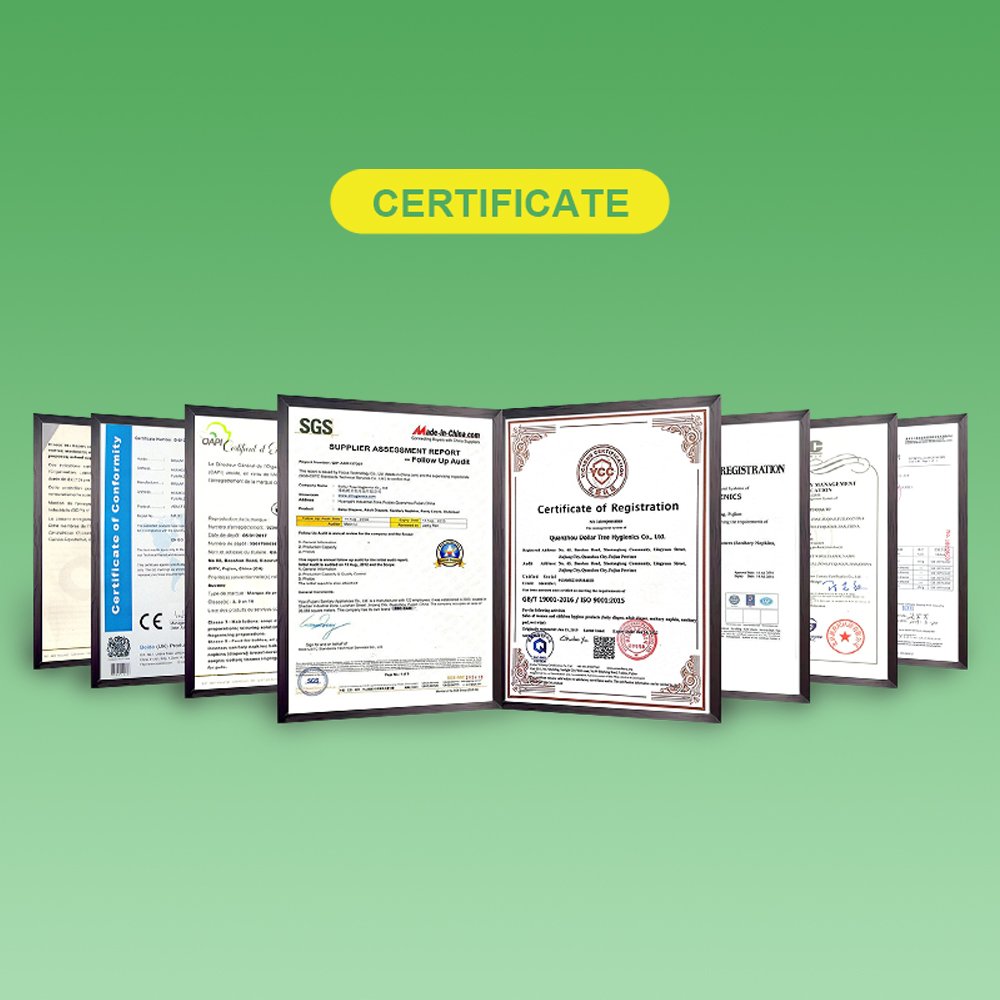
If a potential adult diaper manufacturer can’t produce their certifications, walk away. This is the baseline evidence that they are a serious, professional operation committed to quality and safety. It often seems like a lot of paperwork, but this paperwork is your primary shield.
Here’s what you should be asking for:
ISO 9001 (Quality Management System): This is the global standard for quality control. It proves the manufacturer has documented, repeatable processes to ensure consistent product quality. It shows they are committed to “saying what they do, and doing what they say.”
ISO 13485 (Medical Devices): This is even better. It’s a specific ISO standard for medical device quality systems. Since adult diapers are often classified as Class I medical devices, this certification is a very strong indicator of reliability, traceability, and safety.
FDA Registration (for the US Market): If you plan to sell in the United States, your manufacturer must be registered with the Food and Drug Administration. This is not optional.
CE Marking (for the EU Market): Similarly, this “Conformité Européenne” mark signifies that the product meets the EU’s high standards for health, safety, and environmental protection.
Third-Party Lab Tests: Ask for them! Any reputable manufacturer will have independent lab data validating their product’s absorbency rates, rewet (how much moisture comes back to the surface under pressure), and skin safety.
The Manufacturing Process and Supply Chain
Beyond the product itself, you need to look at the producer. A great sample means nothing if the factory is a mess and the supply chain is fragile.
Production and R&D
You are not just buying a product; you are buying a capability. Does this adult diaper manufacturer innovate? Do they have an in-house Research and Development (R&D) team? The incontinence market is always evolving—users want thinner, more discreet, more absorbent products. You want a partner who is leading this charge, not one still using decade-old technology.
Ask about their manufacturing lines. Are they modern, high-speed lines with automated quality checks (like vision systems that detect flaws)? Or are they older, slower lines that require more manual intervention and are prone to inconsistency?
Supply Chain Transparency
A diaper is made of many components: non-woven fabrics, fluff pulp, SAP, elastics, adhesives. Where do these come from? A good manufacturer has a stable, transparent, and redundant supply chain for these raw materials. You don’t want your business grinding to a halt because their one SAP supplier had a factory fire. Ask them about their raw material sourcing and their contingency plans.
The Business Partnership: MOQs, Customization, and Communication
Finally, you have to evaluate them as a partner you can actually work with. This is where the day-to-day realities of business come in.
MOQs (Minimum Order Quantities)
This is often the first hurdle. A massive, tier-one manufacturer might have an MOQ of several 40-foot containers per SKU. This is simply not feasible for a startup or a regional healthcare chain. You need to find a manufacturer whose production scale matches your business scale. Some Low MOQ adult diaper manufacturers are set up to handle smaller, more flexible runs, which is perfect for new brands or for testing new products.
Customization and Private Label Options
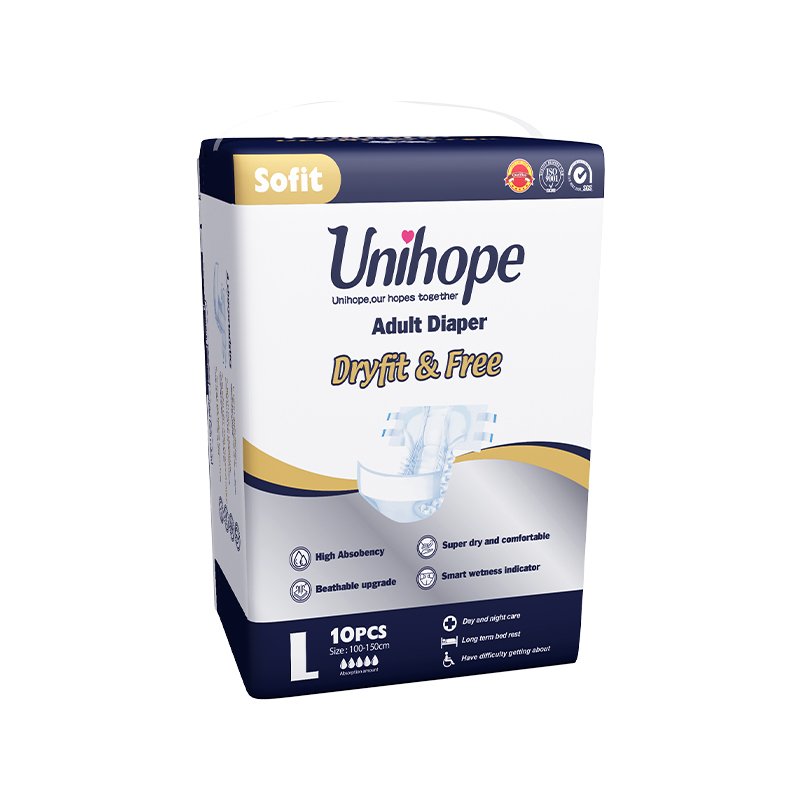
If you’re a retailer, this is your whole business. How much can you customize? A great private label adult diaper manufacturer will act as a consultant. They should be able to offer you:
Good/Better/Best Tiers: (e.g., light, moderate, maximum absorbency).
Packaging Design: Can they work with your design team to produce high-quality, retail-ready bags and cartons?
Product Tweaks: Can you change the color of the backsheet? Add a wetness indicator? Adjust the level of odor control?
Communication and Support
What happens when something goes wrong? (And eventually, something always does). Is your contact a sales rep who disappears after the contract is signed, or do you have a dedicated account manager? How do they handle quality complaints? What is their process for logistics and freight?
It’s one thing to get a great product. It’s another to get a human on the phone at 8 PM when a shipment is stuck at port. Look for a team that is responsive, transparent, and solution-oriented.
Making Your Final Decision: A Simple Vetting Framework
This is a lot to take in, but you can simplify the process. As you compare potential partners, you can even use a simple table to keep your thoughts organized.
| Vetting Criteria | Manufacturer A | Manufacturer B | Notes |
| Product Quality (Samples) | (How was the absorbency, fit, feel?) | ||
| Certifications (ISO, FDA, etc.) | (Were they provided immediately?) | ||
| Manufacturing Tech (R&D) | (Do they seem innovative or outdated?) | ||
| MOQ (Flexibility) | (Does this fit our business model?) | ||
| Customization Options | (Can they make the exact product we want?) | ||
| Communication/Support | (How did they feel to talk to? Responsive?) | ||
| Price (Cost per unit) | (Note: Price is last for a reason.) |
Always, always ask for samples. Not just one or two curated “hero” samples. Ask for a full case from a recent production run. Test them. Wear them yourself (if appropriate). Give them to end-users for feedback. Let a care home trial them for a week. The real-world feedback is invaluable.
Conclusion
Choosing the right adult diaper manufacturer is, without a doubt, one of the most consequential decisions your business will make. As we’ve explored, this process goes far beyond a simple cost-per-unit calculation. It’s a deep dive into the very fabric of your product and your potential partner.
It’s a decision that must be built on a foundation of tangible proof. It starts with a rigorous assessment of core product quality—not just what you see, but the technology within. This means understanding their use of Super Absorbent Polymer (SAP), the design of their absorbent core, and their commitment to skin-friendly, breathable materials that prevent irritation and protect the user’s dignity.
From there, it’s a non-negotiable step to verify compliance and certifications. A potential partner must be able to readily provide their ISO 9001, ISO 13485 (for medical-grade quality), FDA registration, or CE credentials. These documents aren’t just “nice to have”; they are your primary assurance of safety, consistency, and traceability.
But a great product and the right paperwork are still only part of the equation. You are vetting a long-term business partner. This means evaluating their manufacturing capabilities, their commitment to R&D, and the transparency of their raw material supply chain. It also comes down to the practical realities: Do their MOQs (Minimum Order Quantities) fit your business model? Can they deliver the customization your private label brand needs? And critically, is their communication responsive and supportive?
Ultimately, it’s about finding a partner who shares your commitment to quality. It’s about vetting their processes, trusting their technology, and building a relationship that can weather supply chain storms and evolving market demands. The right manufacturer won’t just sell you a product; they will provide a reliable, safe, and dignified solution for your end-users, giving you the solid foundation you need to grow your business. Don’t rush it. Do the research. The long-term health of your brand depends on it.