The adult incontinence market is shifting. It’s no longer just about utility; it’s about comfort, discretion, and dignity. For a B2B buyer or a small company stepping into this sector, the supply chain is the backbone of the brand. If the manufacturing partner fails, the brand fails. Walking through trade shows or browsing Alibaba pages often presents a polished image, but the reality on the production floor can be quite different.
Choosing the right partner goes beyond comparing price sheets. It requires a deep dive into operational realities. When evaluating an adult pull-up diaper factory, there are specific, non-negotiable elements that separate a fleeting vendor from a long-term partner.
1. Production Capacity and Equipment Modernity
It is easy to be impressed by a factory claiming huge output numbers, but seeing the machinery in action tells the real story. In this industry, speed and automation correlate directly with consistency. Older, semi-automated lines often struggle with the complex assembly required for modern pull-ups, such as attaching elastic waistbands effectively without snapping or creating uneven tension.
The Importance of Automated Defect Detection
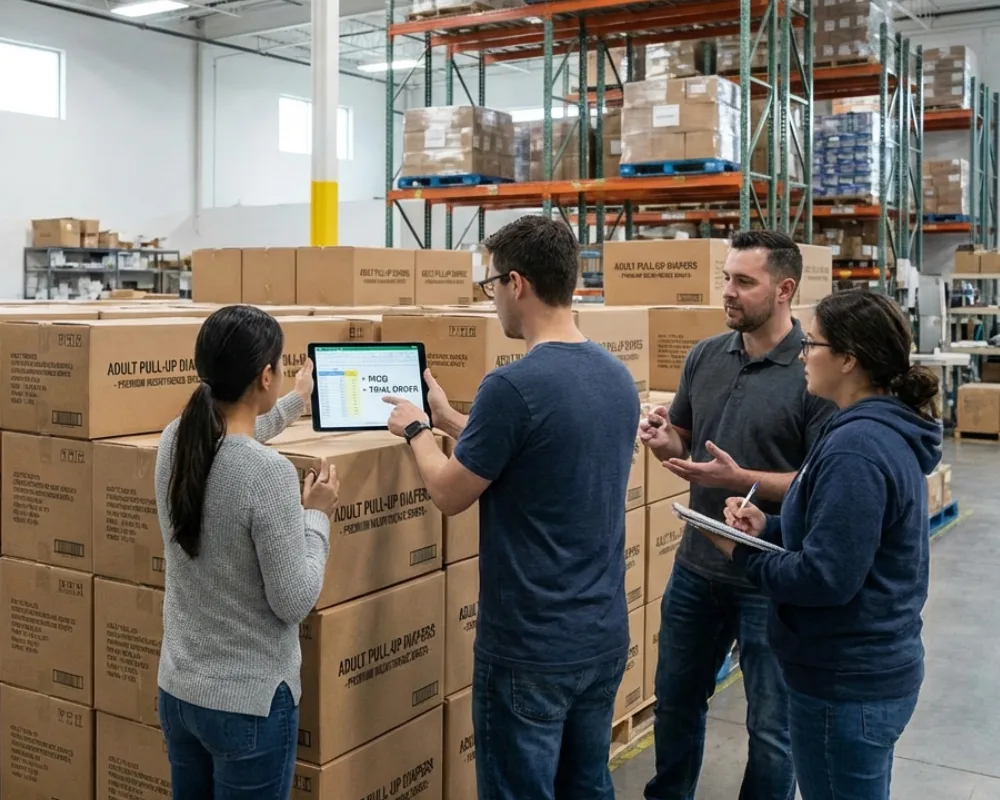
A visit to a high-tier facility usually reveals high-speed lines equipped with vision systems. These cameras scan every diaper for defects—dirt spots, misalignment, or missing tabs—and automatically reject them. In contrast, factories relying heavily on manual inspection at the end of the line often miss subtle defects. For a B2B buyer, this equipment is a safety net. It ensures that the product landing on the retail shelf is uniform, preserving the brand’s reputation.
2. Quality Control and Material Sourcing
Quality is a vague term until you look at the raw materials. The performance of an adult pull-up relies heavily on two components: the Super Absorbent Polymer (SAP) and the fluff pulp. A reputable adult pull-up diaper factory will be transparent about where they source these materials. Top-tier factories often source SAP from established suppliers in Japan or Germany, known for superior absorption rates.
- SAP Ratios: It is crucial to check if the factory uses the correct ratio of SAP to fluff pulp. Too much pulp makes the diaper bulky; too little SAP causes leaks.
- Adhesives: The smell in the factory can be a tell-tale sign. A strong chemical odor often indicates the use of cheaper, low-grade hot melt adhesives, which can cause skin irritation for the end user.
Certifications as a Baseline
Certifications are not just badges; they are evidence of a standardized process. While ISO 9001 is standard, specialized certifications like FDA registration (for the US market) or CE marking (for Europe) indicate that the factory understands regulatory hurdles.
| Feature | Standard Factory | Premium Factory |
|---|---|---|
| Material Sourcing | Local, unspecified suppliers | Branded global suppliers (e.g., Sumitomo, IP) |
| Quality Check | Random manual sampling | 100% In-line automated camera inspection |
| Certifications | Basic Business License | ISO 13485, FDA, CE, GMP |
| R&D Capability | Copies existing samples | Develops new cores and eco-friendly options |
3. OEM/ODM and Customization Flexibility
For a small company, the ability to differentiate is key. A factory might produce a fantastic generic product, but if they lack flexible OEM (Original Equipment Manufacturer) capabilities, the brand will struggle to stand out. This involves more than just printing a logo on the backsheet.
Does the factory offer varied core structures? Can they produce ultra-thin cores versus traditional thick fluff cores? Customization extends to the packaging as well. Buyers often find that rigid Minimum Order Quantities (MOQs) for custom packaging are a major barrier. A partner willing to negotiate on MOQs for trial orders demonstrates a willingness to grow with the client.
4. Innovation and Sustainability Initiatives
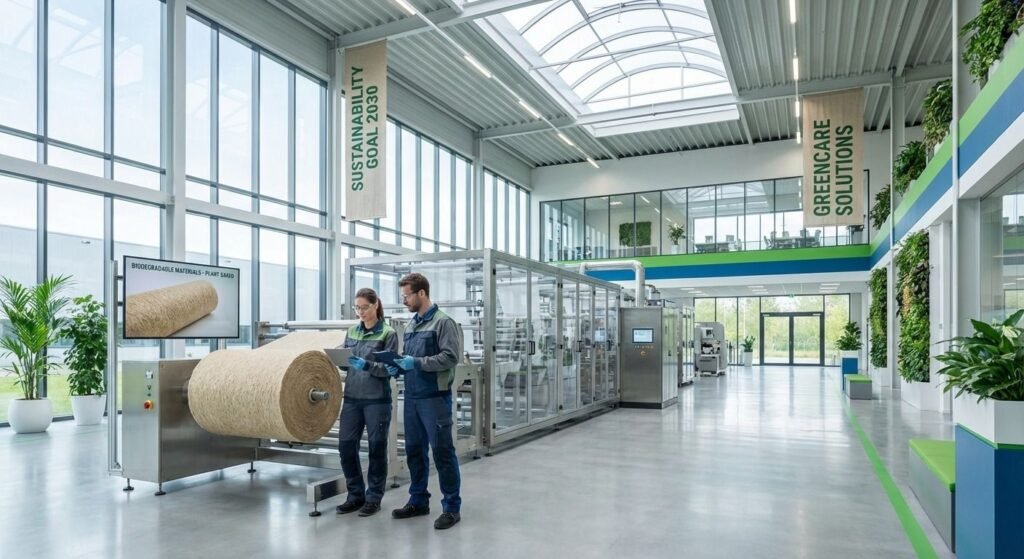
The market is clearly trending toward eco-consciousness. Even if the current business model doesn’t focus on green products, the adult pull-up diaper factory chosen should be capable of pivoting in that direction.
Observing their R&D lab—if they have one—provides insight into their future readiness. Are they testing biodegradable films? Do they have bamboo fiber options? A factory stuck producing only traditional plastic-heavy diapers may become obsolete as regulations on single-use plastics tighten globally.
- Biodegradable Options: Look for capabilities in processing PLA (polylactic acid) or other compostable materials.
- Waste Management: Efficient factories recycle production waste effectively, which can also keep costs stable.
5. Logistics and Supply Chain Resilience
The best product in the world is useless if it is stuck in a container port or delayed by raw material shortages. Stability in the supply chain is often overlooked during the initial vetting process.
It is prudent to ask about their raw material inventory levels. A factory operating “just-in-time” with low stock might face shutdowns during global supply chain disruptions. Furthermore, their location relative to major ports impacts shipping lead times and costs. A factory located deep inland might offer lower manufacturing costs, but those savings could be eroded by expensive domestic logistics to get the goods to the port.
Conclusion
Selecting an adult pull-up diaper factory is a decision that requires balancing current costs with future stability. It involves looking past the sales pitch to assess the machinery, the materials, and the management mindset. A factory that invests in automated quality control and sustainable practices is likely to be a partner that can support a brand’s growth for years to come.
For you want to know detailed lists of adult diaper manufacturer, you can check our list Top 6 Adult Diaper Manufacturers.